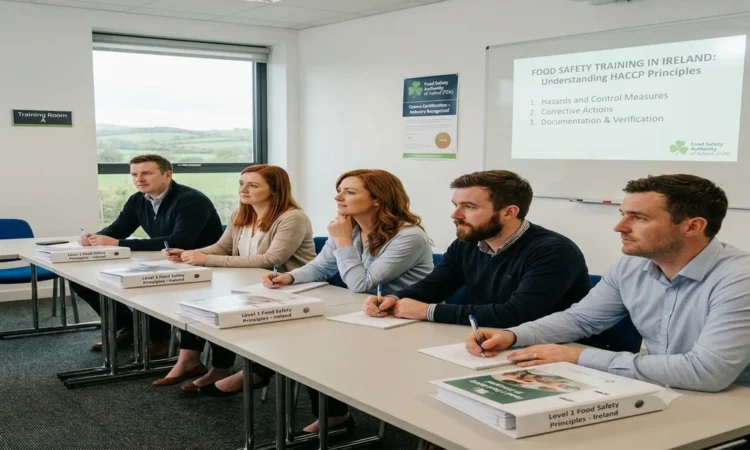
| ⚡ At a Glance HACCP is a mandatory food safety management system for hotels, catering companies, and takeaways in Ireland under EC Regulation 852/2004. It requires all food businesses to identify hazards, implement controls, and train staff appropriately. Irish HACCP (www.irish-haccp.ie) provides accredited HACCP Level 1 & 2 online training specifically designed for Ireland’s hospitality and catering sectors. |
Why HACCP Compliance Is Critical for Hotels, Catering & Takeaways
Hotels, catering companies, and takeaway businesses in Ireland operate in some of the most food safety-intensive environments in the industry. High-volume food preparation, diverse menus, rapid service, and seasonal staffing fluctuations all create significant food safety challenges.
The Food Safety Authority of Ireland (FSAI) applies the same legal standards to all food businesses – regardless of whether they serve 10 or 1,000 covers per day. EC Regulation 852/2004 requires every food business operator to implement and maintain a HACCP-based food safety management system.
When we analyse FSAI enforcement data, we consistently find that hotels, catering operations, and takeaways are frequently cited for inadequate staff training and insufficient HACCP documentation. The solution is structured, accredited HACCP training through Irish HACCP.
HACCP for Hotels: Specific Considerations
Hotel kitchens present unique HACCP for Cafes challenges. A large hotel may prepare breakfast, lunch, afternoon tea, dinner, bar food, banqueting menus, and room service simultaneously – each with different temperature requirements, allergen risks, and serving methods.
Key HACCP focus areas for hotels include:
- Buffet management: Hot food must be kept at ≥63°C; cold food at ≤5°C. Regular temperature monitoring and logging are essential.
- Cook-chill and cook-freeze systems: These require precise HACCP controls and trained staff who understand the risks.
- Allergen management: Hotels must manage allergens across multiple menus and communicate accurately with guests who have dietary requirements.
- Banqueting and events: Large-batch cooking and buffet service require detailed HACCP plans and trained supervisory staff.
- Staff turnover: Hotels often have high staff turnover, making regular HACCP induction training through www.irish-haccp.ie an operational necessity.
HACCP for Catering Companies in Ireland
HACCP for Catering companies – whether serving corporate offices, schools, hospitals, or events – face the additional challenge of operating across multiple sites and transporting prepared food. HACCP controls must extend beyond the kitchen to cover:
- Food transport: Maintaining correct temperatures during delivery (hot food ≥63°C; cold food ≤5°C)
- Off-site service: Setting up safe food service environments at external venues
- Batch cooking: Managing large quantities of food safely, with accurate temperature monitoring
- Supplier management: Verifying that all ingredients come from approved, safe suppliers
Catering managers who complete HACCP Level 2 training at Irish HACCP are equipped to design and implement HACCP plans that cover all of these operational complexities.
HACCP for Takeaways in Ireland
Ireland’s takeaway sector has grown significantly in recent years, driven by delivery platforms and changing consumer behaviour. But high volumes and fast service do not reduce HACCP obligations – if anything, they increase the risk of food safety failures.
Common HACCP for takeaways include:
- Cross-contamination from raw proteins (chicken, beef, fish) used in high volumes
- Temperature abuse during busy service periods – food left in the danger zone (5°C-63°C) too long
- Delivery packaging failing to maintain safe temperatures
- Allergen cross-contact – particularly in kitchens handling nuts, gluten, dairy, and shellfish
- Staff handling cash and food simultaneously without adequate hand hygiene
HACCP Comparison: Hotels vs Catering vs Takeaways
| Factor | Hotels | Catering Companies | Takeaways |
| Scale | High volume, multi-outlet | Variable – site dependent | High volume, fast service |
| Key Risk | Buffet management, allergens | Food transport, batch cooking | Cross-contamination, temp abuse |
| HACCP Focus | Multi-menu, banqueting | Off-site service, supply chain | Rapid prep, delivery safety |
| Staff Training Need | All staff – Level 1 & 2 | All staff – Level 1 & 2 | All staff – Level 1 minimum |
| FSAI Inspection Risk | High – complex operations | Moderate-High | High – rapid service risks |
| Recommended Course | irish-haccp.ie Level 1 & 2 | irish-haccp.ie Level 1 & 2 | irish-haccp.ie Level 1 & 2 |
Step-by-Step: Implementing HACCP in a Hotel or Catering Business
- Train all food handlers to HACCP Level 1 via www.irish-haccp.ie before they begin food preparation.
- Train all supervisors and managers to HACCP Level 2.
- Conduct a full hazard analysis of all food preparation stages – from delivery to service.
- Identify and document all critical control points (CCPs) with specific critical limits.
- Implement monitoring procedures – temperature logs, cleaning records, delivery checklists.
- Establish corrective action procedures for when critical limits are not met.
- Maintain all records for FSAI inspection – minimum 2 years recommended.
FAQ: HACCP for Hotels, Catering & Takeaways Ireland
Q: Do hotels need a separate HACCP plan for banqueting?
A: Yes. Banqueting operations involve large-batch cooking, extended service times, and high allergen risk – all of which require a specific HACCP plan and trained supervisory staff.
Q: What HACCP records must a catering company keep?
A: Catering companies must maintain temperature logs, delivery records, cleaning schedules, corrective action records, and staff training certificates.
Q: Are takeaway delivery drivers required to have HACCP training?
A: If drivers handle food directly, they should have basic HACCP Level 1 awareness training. All kitchen staff must be fully trained.
Q: How often should hotel kitchen staff be re-trained in HACCP?
A: At least every 1-2 years, and whenever significant menu changes or new food safety legislation is introduced.
Q: What happens if a hotel fails an FSAI inspection?
A: The FSAI may issue Closure Orders, Improvement Orders, or prosecute food business operators. Documented HACCP training is a key mitigating factor.
Key Takeaways
- HACCP is legally mandatory for hotels, catering companies, and takeaways in Ireland.
- Each sector has unique HACCP risks that require specific training and documentation.
- Irish HACCP provides Level 1 & 2 online training accessible to all hospitality staff.
- FSAI inspectors check for training certificates, temperature records, and HACCP documentation.
- Proactive, certified training is far less costly than enforcement action or food safety incidents.
Expert Verdict
Having worked with food businesses across Ireland’s hospitality and catering sectors, we consistently find that the businesses with the lowest FSAI risk are those with robust, documented HACCP training programmes in place. The investment in online HACCP training through Irish HACCP pays for itself many times over in reduced risk, fewer incidents, and confident, capable staff.
Conclusion
Whether you manage a five-star hotel kitchen, a school catering contract, or a busy takeaway, HACCP compliance is non-negotiable. Irish HACCP makes it straightforward with fully online, nationally recognised HACCP Food Safety Level 1 & 2 training. Visit www.irish-haccp.ie to enrol your team today, or contact info@irish-haccp.ie for group training options.
| SEO Tags: HACCP for hotels Ireland, HACCP for catering Ireland, HACCP for takeaways Ireland, food safety hotel kitchen, catering HACCP compliance, takeaway food hygiene Ireland, FSAI hotel inspection GEO Tags: Ireland, Dublin, Cork, Galway, hotel catering Ireland, Irish hospitality sector, takeaway food safety Ireland Entity Keywords: HACCP, food safety, hotel kitchen, catering company, takeaway, FSAI, critical control points, allergen management, temperature control, Irish HACCP |