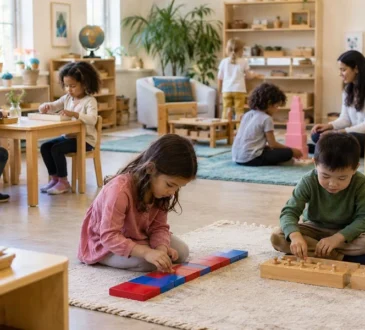
Walk into any childcare and preschool Singapore facility and you’ll notice something striking. Teachers talk constantly with young children. They narrate activities, ask questions, and respond to endless streams of chatter. This ongoing dialogue shapes how children think, learn, and see themselves.
The words educators choose carry weight. A child who hears “You worked hard on that puzzle” learns something different than one who hears “You’re so clever”. The first statement teaches persistence. The second suggests ability is fixed.
Research shows that children absorb language patterns from their teachers. These patterns influence their thinking for years to come. When educators speak with care, they build stronger foundations for learning.
How Teacher Talk Shapes Young Minds
Children in early education settings spend significant hours with their teachers. During this time, they soak up vocabulary, sentence structures, and ways of expressing ideas. The language environment matters as much as the physical one.
Teachers who use rich vocabulary expose children to new words naturally. Instead of saying “big”, they might say “enormous” or “gigantic”. These varied words expand children’s ability to describe their world precisely.
Questions matter too. Open-ended questions like “What do you think will happen?” encourage deeper thinking than yes-or-no questions. They teach children to reason, predict, and explain their thoughts.
Building Confidence Through Positive Communication
The way teachers respond to mistakes affects children’s willingness to try new things. Statements like “That was a good attempt, let’s try together” create safety. Children learn that errors are part of learning, not something to fear or hide.
Acknowledging effort rather than just results teaches valuable lessons. When a teacher says “You kept trying even when it was difficult”, the child learns that persistence brings success. This mindset helps children tackle harder challenges as they grow.
Many childcare and preschool Singapore centres now train their staff in these communication methods. Teachers learn to notice and name emotions, helping children develop emotional vocabulary. A child who can say “I feel frustrated” handles their feelings better than one who only knows how to cry or hit.
Cultural Sensitivity in Language Use
Singapore’s multicultural society means preschool classrooms often include children from various backgrounds. Teachers must consider how their words land across different cultural contexts. What sounds encouraging in one culture might feel uncomfortable in another.
Some families value collective achievement while others emphasise individual success. Skilled teachers adjust their language to respect these differences. They might say “We all worked together” in one situation and “You solved that yourself” in another.
Code-switching between languages also plays a role. Many Singapore preschools use English as the main teaching language, but teachers often incorporate other languages naturally. This validates children’s home languages and supports bilingual development.
Creating Language-Rich Environments
Teachers can’t just rely on planned lessons. The richest language learning happens during everyday moments. Snack time, outdoor play, and transition periods all offer chances for meaningful conversation.
Narrating actions helps younger children connect words to experiences. “I’m pouring the water slowly into your cup” teaches vocabulary and concepts together. Children learn words in context, which helps them remember and use these words later.
Reading stories aloud remains one of the strongest language-building activities. But it’s not just about reading the words on the page. Teachers who ask questions, make predictions, and connect stories to children’s lives create deeper engagement.
Supporting Language Development at Home
Parents can extend what happens in childcare and preschool Singapore settings. Using similar language strategies at home reinforces learning. Talk with your child about their day, asking specific questions that require more than one-word answers.
Describe your own actions as you cook, clean, or run errands. This narration technique that teachers use works equally well at home. Your child learns new words and concepts through everyday activities.
Pay attention to how you respond to your child’s efforts and mistakes. Your words shape their developing self-image and approach to learning challenges. Choose language that builds resilience and encourages growth.
Teacher language in early education isn’t just about teaching vocabulary. It’s about shaping how children think, learn, and view themselves as capable learners. The words spoken in preschool classrooms today echo in children’s minds for years to come.