
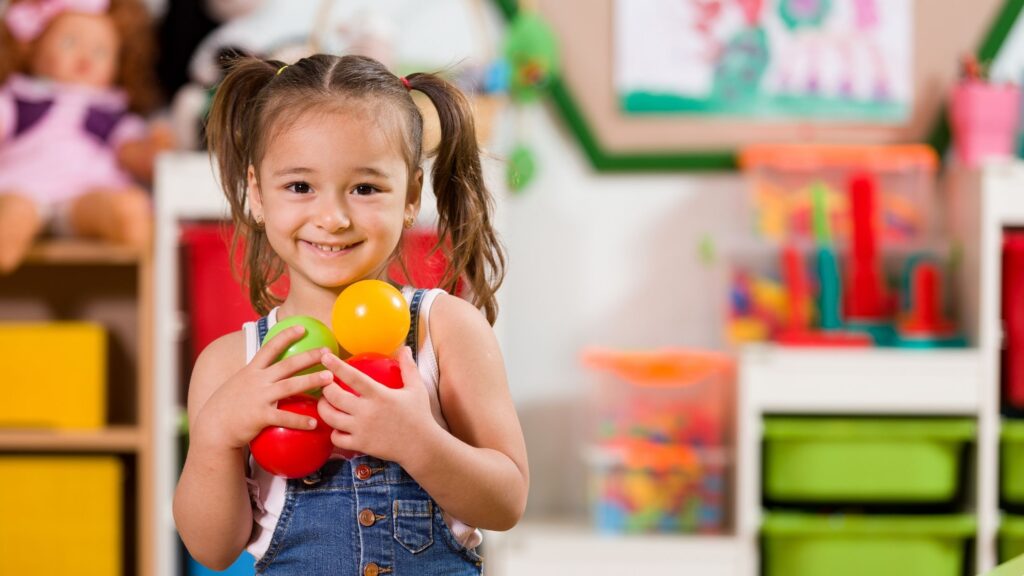
This guide examines the essential pillars of play-based pedagogy, from sensory exploration to nature-based play, to help families identify truly child-centric learning environments.
In the field of early childhood education, the consensus is clear: children under the age of six learn best through active exploration and direct experience. This “play-based” philosophy has taken a strong hold in Nagpur’s best schools, with the city’s newest preschools moving away from traditional textbooks and toward sensory-rich environments. For a young child, every interaction with sand, water, or building blocks is a lesson in physics, mathematics, and social negotiation. By prioritising the “joy of discovery”, these schools ensure that a child’s first encounter with formal education is positive, empowering, and deeply engaging.
For parents, the search for the best school for early years involves looking for a curriculum that follows the child’s natural interests. The best play school in Nagpur is one where the classroom is treated as a “third teacher”, with materials carefully curated to spark curiosity and inquiry. These schools provide a bridge between the safety of the home and the structured world of primary education, ensuring a smooth, joyous transition. By investing in an experiential start in Nagpur, parents ensure their children develop the cognitive flexibility and emotional resilience needed for a successful academic career.
Evaluating the Play-Based Framework: A Parent’s Guide
A high-quality preschool in 2026 is defined by its ability to facilitate learning through purposeful play. Parents evaluating the best play school in Nagpur should look for environments that prioritise “unstructured” discovery.
The Developmental Benefits of Play Experiences
|
Play Experience |
What Children Do |
Primary Developmental Benefits |
|
Open-Ended Play |
Build, stack, sort, and create freely |
Creativity, problem-solving, curiosity |
|
Sensory Exploration |
Touch, pour, and explore textures |
Cognitive growth and sensory integration |
|
Role Play |
Pretend play, group storytelling |
Language development and social skills |
|
Movement-Based |
Climbing, balancing, free movement |
Gross motor skills and body awareness |
|
Art & Expression |
Painting, clay work, music play |
Emotional expression and fine motor control |
|
Nature Play |
Gardening, water play, nature walks |
Environmental awareness and resilience |
|
Social Interaction |
Group play and shared activities |
Empathy, communication, and emotional literacy |
The Power of Play-Based Learning
Play is not just a break from learning; for a toddler, play is learning in its most effective and natural form. A high-quality playschool utilises “open-ended” materials like wooden blocks, clay, and loose parts to encourage divergent thinking. These activities help in developing the fine motor skills and hand-eye coordination essential for future writing.
Why Play is the “Work” of the Child
- Cognitive Scaffolding: Play allows children to encounter problems-like a collapsing block tower-and test multiple solutions independently.
- Neural Connectivity: Active exploration stimulates brain areas responsible for executive function, memory, and spatial reasoning.
- Risk-Taking: A safe play environment allows children to fail and retry without the pressure of a “right or wrong” academic answer.
Creating a Sensory-Rich Environment
One of the defining features of a top-tier institution is its focus on sensory exploration. Leading schools feature specialised “sensory rooms” and outdoor nature zones where children can interact with the elements. This hands-on exploration is critical for building the neural pathways required for complex cognitive tasks in later life. By interacting with the world through their five senses, children make learning much more meaningful and “sticky” compared to traditional nurseries.
Social and Emotional Development Through Interaction
A primary school in Nagpur provides the perfect environment for children to learn vital social skills, such as sharing, waiting for their turn, and resolving conflicts through communication.
Essential Milestones in Social-Emotional Learning
- Emotional Literacy: Learning to name and express feelings like frustration, joy, or empathy in a group setting.
- Conflict Resolution: Navigating peer disputes with the guidance of a teacher acting as a facilitator rather than a judge.
- Collaborative Inquiry: Working together on a shared goal, such as building a “house” or telling a group story.
The Importance of Outdoor and Nature-Based Play
Leading schools prioritise large, green outdoor spaces where children can run, climb, and explore. Outdoor play is essential for developing gross motor skills and a sense of adventure. Many of these schools also incorporate “kitchen gardens”, where children learn about where their food comes from by planting and tending to their own vegetables. This connection to the earth fosters a sense of responsibility and environmental stewardship from a very young age.
Building a Foundation for Lifelong Curiosity
Ultimately, the goal of a high-quality play-based foundation is to create “lifelong learners”. By allowing children to learn at their own pace, these schools ensure that the desire to learn remains intact throughout their lives. This experiential start provides the cognitive flexibility and emotional stability needed to handle the academic demands of the secondary years and beyond.
Key Takeaways
- Children under six learn best through exploration, movement, and real-world interaction.
- Play-based pedagogy naturally builds early literacy and numeracy-without pressure.
- Sensory-rich classrooms strengthen neural connections essential for memory and reasoning.
- Open-ended materials encourage creativity, independence, and flexible thinking.
- Outdoor and nature-based play enhances resilience, coordination, and environmental awareness.
- Social-emotional skills such as empathy and communication develop naturally through group play.
- Experiential learning creates “sticky” knowledge that lasts beyond preschool years.
- Documentation and observation replace rote testing in high-quality early years settings.
- The right preschool creates a joyful first school experience that shapes lifelong attitudes toward learning.
- Strong early foundations ease the transition into structured academic systems, such as the Central Board of Secondary Education framework, later on.
FAQs:
How do I know if a preschool in Nagpur is truly play-based, or just “play time” marketing?
Look for open-ended materials, learning centres, child-led activities, visible documentation of learning (photos/portfolios), and teachers who guide through questions-not constant instruction.
How important is outdoor and nature-based play when choosing the best preschool in Nagpur?
Very important. Outdoor play builds gross motor strength, confidence, resilience, risk assessment, and curiosity. Nature zones and kitchen gardens add real-world learning and responsibility.
What teacher qualities should parents look for in the best play school in Nagpur?
Teachers should be warm observers, strong facilitators, and skilled questioners-able to scaffold play, support conflict resolution, and track development through portfolios and milestones.
What’s the ideal teacher-child ratio for play-based preschools?
Lower ratios are better for personalised support and safety. A good benchmark is small groups with enough adults to supervise sensory play, outdoor exploration, and social learning effectively.
You may also like
-
How Petaling Jaya Day Care Supports Study, Play, and Rest
-
Classroom Environment and How It Shapes Daily Behaviour
-
Predicting Pandemics: How AI Models Are Safeguarding Public Health
-
Monte Carlo Tree Search Exploration–Exploitation Tradeoff: Balancing Discovery and Optimisation in Decision-Making Systems
-
Why Early Exposure to Chinese Matters More Than You Think